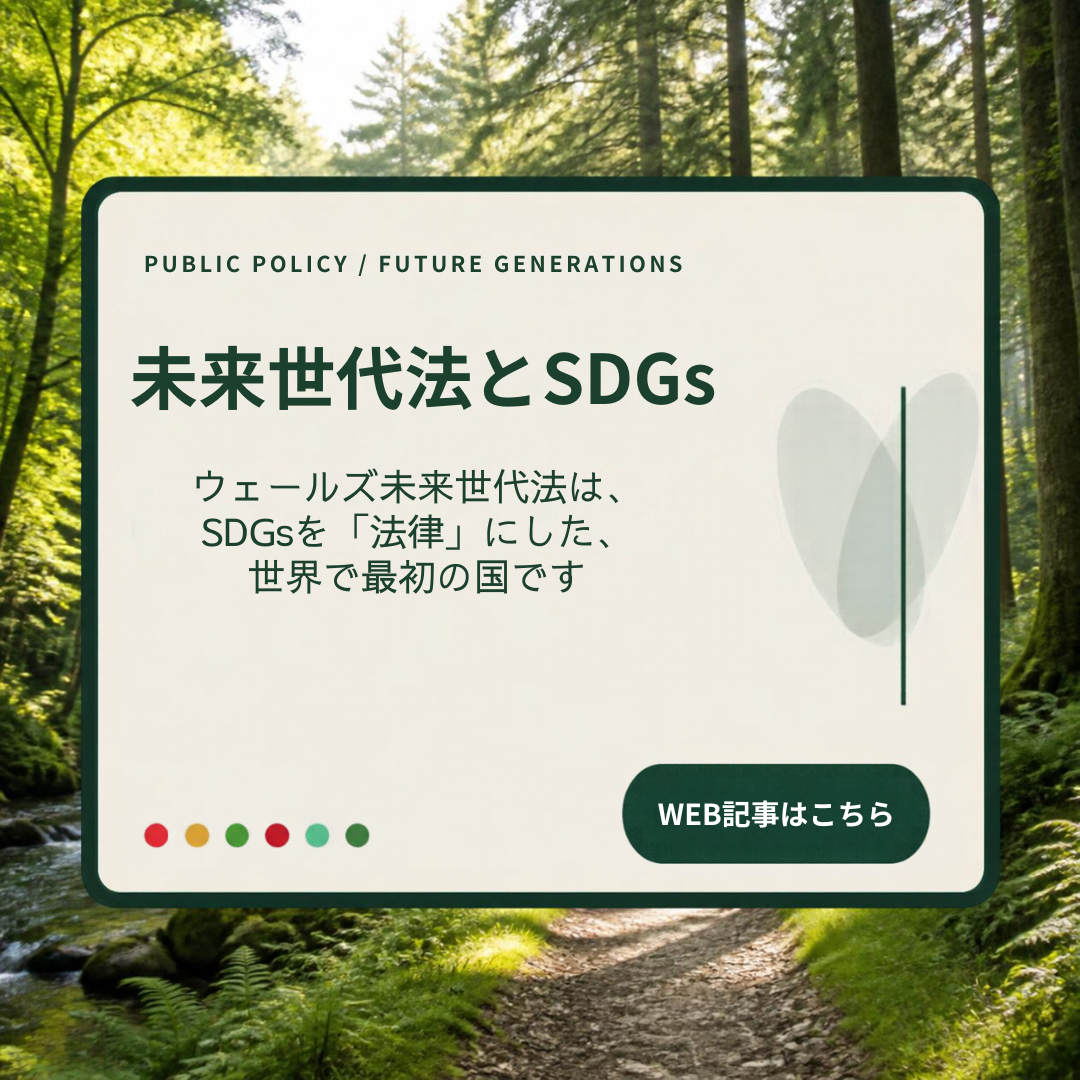
September 4th 2026 (online)
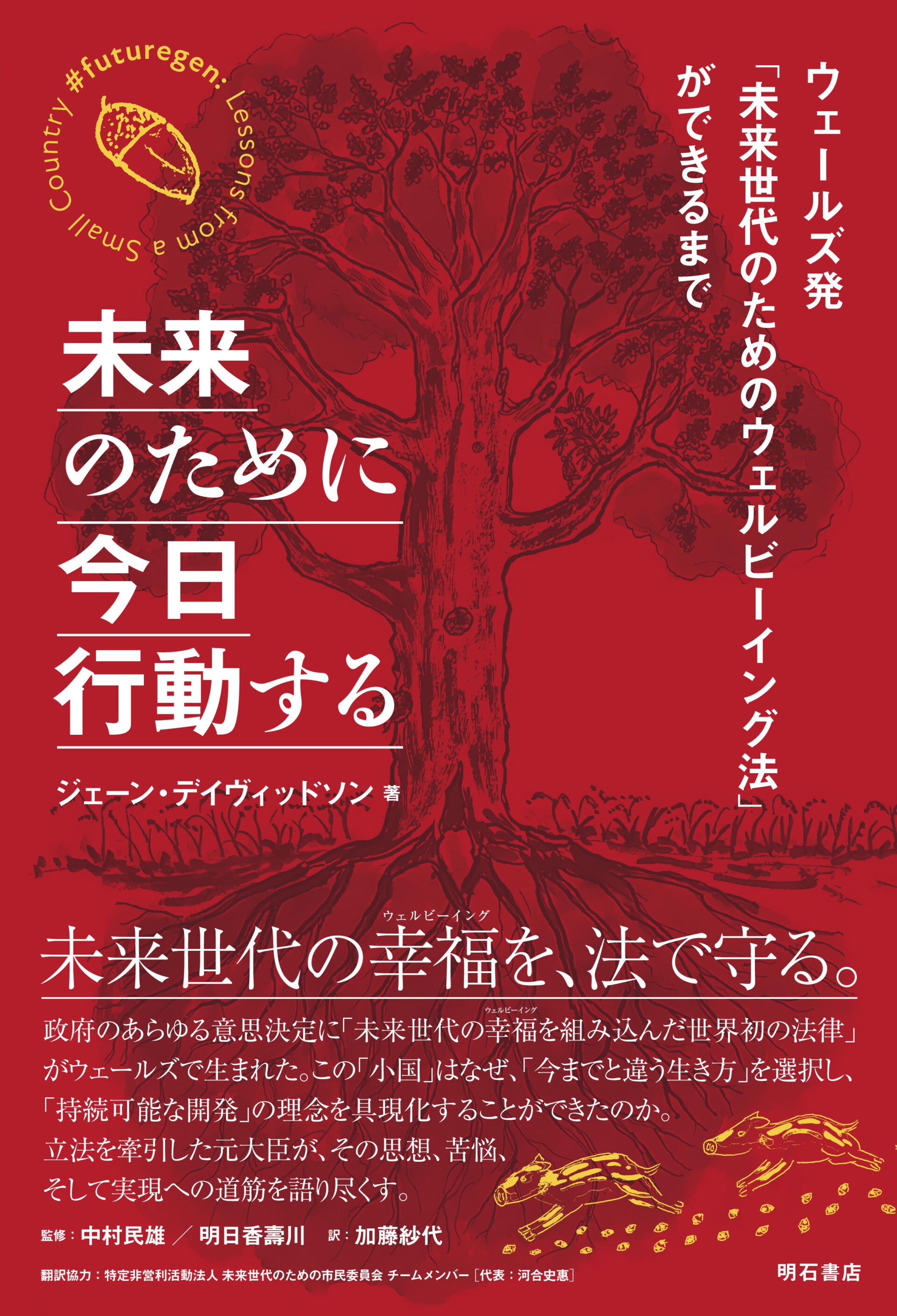
Learning from the Well-being of Future Generations (Wales) Act, the NPO Citizen’s Committee for Future Generations aims to establish systems in Japan where all public policies protect and value both present and future generations.
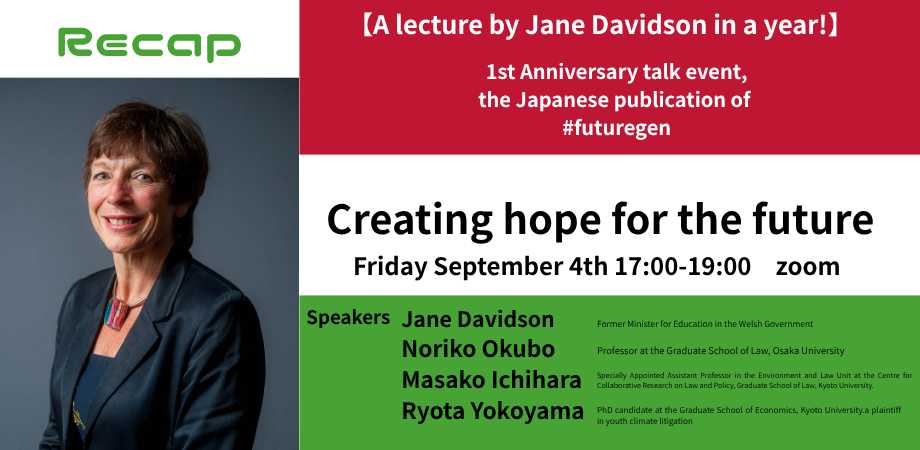
In September last year, to commemorate the Japanese publication of #futuregen, the author Jane Davidson—who originally proposed the Well-being of Future Generations Act—visited Japan for the first time. Marking one year since her visit, we hosted an online symposium on September 4th to reflect with citizens on how the “power of the law” can function in Japan today to safeguard the lives of both current and future generations.
Jane and three Japanese researchers and practitioners shared insights on how to pass hope to the next generation, the legal power as a tool to build a better future, and the vital importance of transforming social systems.
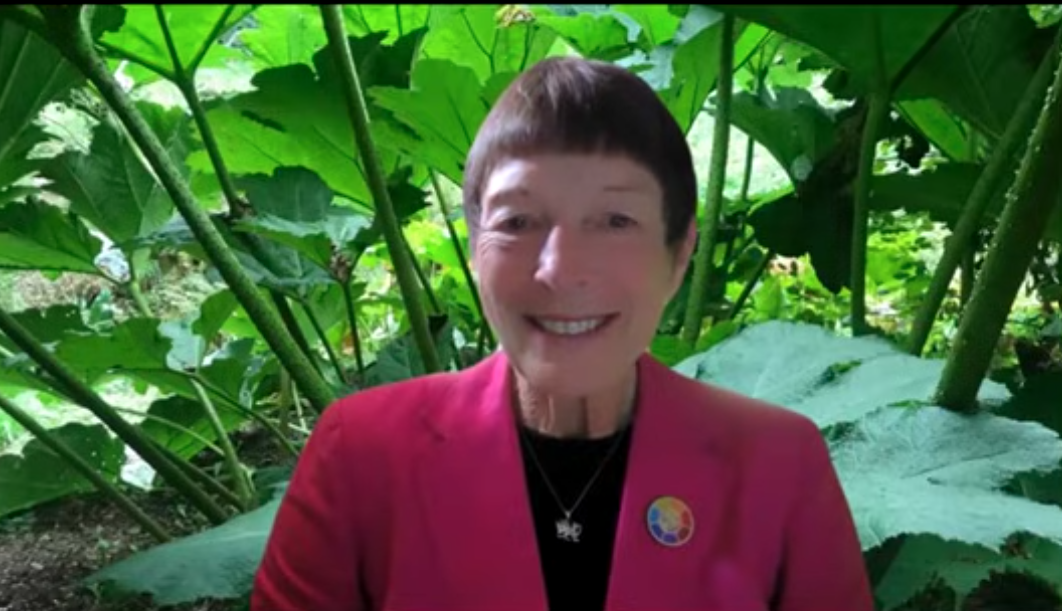
Jane Davidson “What happens if you legally protect the interests of future generations alongside current ones?”
Jane graciously accepted our invitation to speak, wishing to deliver a message of “hope” to us in Japan.
She shared past milestones as well as current ongoing initiatives in Wales.
The Well-being of Future Generations Act establishes “7 Well-being Goals,” which the national government and public bodies are legally required to achieve.
The wording of these goals is based on voices gathered during a national conversation in 2014, where people were asked what kind of country they wanted to live in. Jane emphasized that collecting these voices across communities was meaningful precisely because it was led not by the government, but by an umbrella organization of various large and small NGOs, working in collaboration with young people and climate activists.
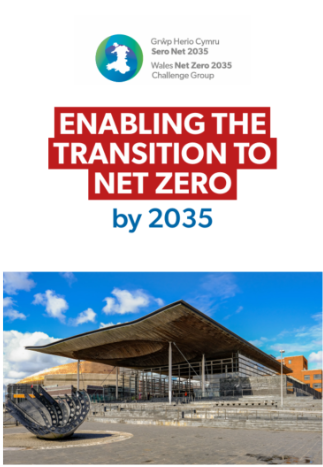
At the request of the Welsh Government and the leader of Plaid Cymru, Jane currently serves as the chair of the country’s Net Zero plan. Utilizing insights from leading global research institutes, she helped formulate a 10-year action plan outlining the immediate steps the government must take to reach its goals by 2050. As a result, Wales is on track to achieve these targets at a pace exceeding the UK as a whole. Jane strongly hopes the government will spark another national conversation to re-engage citizens’ voices on this initiative.
Additionally, she introduced recent developments, such as the Welsh Government addressing climate change and nature loss as an integrated issue.
Jane’s last point was about loving. “Do we love each other enough in order to take this agenda forward?”
Noriko Okubo “Protecting the Rights of Future Generations Through the Power of Law: Intergenerational Equity and the Aarhus Convention”
Today, environmental rights, the rights of indigenous peoples and communities, and the rights of future generations and nature are beginning to gain recognition. She explained that the foundational pillars for these are the right to know, the right to participate, and the right to seek redress.
In Ecuador, the rights of nature have been recognized in the constitution. There are shared principles with the Future Generations Act, such as applying precautionary measures and adopting approaches unique to local contexts.
To realize these rights, specific decision-making mechanisms are essential.
Information is necessary to make decisions, and societal mechanisms are required to challenge decisions if they are wrong. To guarantee these as rights, the Aarhus Convention was adopted in the environmental field in 1998. Similarly, in Latin America and the Caribbean, the Escazú Agreement was adopted in 2018.
Furthermore, regarding public participation in policy, in cases such as development permits, it is crucial to analyze who will be affected by the development even before the application process begins. The affected individuals and developers must actively engage in dialogue beyond the standard legal framework.
The Aarhus Convention emphasizes that the law serves merely as a minimum guarantee. Information should be provided free of charge, and opportunities should be made available not only for submitting written opinions, but also for two-way dialogue. Even if an opinion is not adopted, how those concerns and opinions were taken into account should be traceable. Publishing the final decision ensures that if there are violations of rules in the decision-making process, they can be challenged in court.
While concerns regarding renewable energy are also heard in Japan, Noriko Okubo highlighted the importance of not hiding these concerns, but rather working together to create better solutions. As an example, she cited a local ordinance in Aomori enacted to foster the coexistence of Mt. Hakkoda’s natural environment and wind power generation.
She noted that simply declaring rights is not enough; real change comes from building up processes step-by-step, emphasizing the necessity of accumulating small, steady changes.
Lecture by Masako Ichihara: “Climate Litigation by Youth”
Climate litigation is on the rise globally, with court rulings in one country increasingly influencing others. As an example, a student movement in the Republic of Vanuatu created a powerful worldwide momentum, leading to an advisory opinion from the International Court of Justice.
Masako Ichihara pointed out that climate litigation is being brought by those whose voices have not been sufficiently reflected in climate laws primarily developed by advanced nations. She noted that a roadmap forward involves creating rules through accumulated judicial precedents and combining them in an appropriately balanced way.
Lecture by Ryota Yokoyama: “Youth Climate Litigation to Survive Tomorrow”
Ryota Yokoyama spoke from his perspective as a plaintiff in youth climate litigation. While there have been only six climate lawsuits in Japan so far, climate litigation serves as a key tool to urge an energy transition and protect the future, with over 3,000 cases filed worldwide.
He stated that what they are demanding is science-based emissions reduction. His wish is nothing extraordinary—simply to protect a ordinary future where everyone can safely enjoy sports and experience the rich change of Japan’s four seasons.
Panel discussion
Panel Discussion
Noriko Okubo shared that during her childhood in Sendai City, there was a “Local Children’s Association” where children could directly dialogue with the Mayor, which eventually led to the enactment of an ordinance for the protection of the Hirose River’s clean waters. Based on this experience, she noted that having even a single experience of one’s voice being heard during childhood makes a significant difference.
Jane emphasized the vital importance of involving young people in decision-making processes. In Wales, for businesses to receive government funding, they are legally required to demonstrate that their actions align with the Well-being of Future Generations Act. She stated that democracy is not merely about voting every five years, but rather about maintaining a continuous dialogue between citizens and decision-makers regarding the future they desire.
In Wales, civic education has nurtured active citizenship and a sense of participation among citizens. In 2003, the education system was reformed to introduce outdoor learning and abolish rigid subject divisions. Furthermore, participation principles were introduced to allow young people to discuss with their peers and teachers the kind of education they desire and the content they are currently receiving. This paved the way for the creation of the Youth Parliament. Establishing systems where young people can actively participate and express their views in all aspects of life is crucial for confronting a challenging future.
Future Generations and Nature: How to Give Voice to the Voiceless in Decision-Making
Masako Ichihara emphasized the importance of respecting young people as autonomous individuals. She pointed out that the ultimate goal is to facilitate genuine dialogue between older and younger generations, highlighting the crucial need to design frameworks for equal and constructive conversation.
Message from Jane to Japan
If everybody thinks about the oldest person and youngest person in their mind, what are they doing to make sure both of them have the best life possible? If we always think about this we can change our decisions.
It is also vital to get out into nature. While human beings are important, of course, we are part of something much larger—and that is what we must protect.
Conclusion: Starting from Small Successes
Ryota Yokoyama concluded by emphasizing the importance of building momentum through vision, participation, and small successes. He noted that the event truly reinforced for him the vital need to engage in intergenerational discussions—involving not just the youth, but people across all generations—to bring these changes to life.
In Closing: Realizing a Future Generations Act in Japan
Our movement to realize a Future Generations Act in Japan is just beginning. To take action starting with what each of us can do in our respective places, we hope to continue providing opportunities for ongoing dialogue.
Eighty people registered for this event, and 22 participants responded to our post-event survey. They shared warm feedback such as “It was a truly meaningful time” and “It inspired and encouraged me.”
To feel the passion and energy of the day, please watch the archived video recording. Jane’s own voice is powerful, gentle, and truly uplifting. Subtitles are available. If you would like to view the video, please contact us by email at office@futuregenerations.jp